Columbia Law School
 Sky Blog
Thank you Karen [Barr] and thank you all for hosting me today [March 5]. I appreciate IAA’s engagement on the issues important to its members and to the broader markets, and I’m honored to have the opportunity to speak to
investors
Wachtell Lipton Shines a Spotlight on Boards
The ever-evolving challenges facing corporate boards prompt periodic updates to a snapshot of what is expected from the board of directors of a public company—not just the legal rules, or the principles published by institutional investors and various corporate and …
ISS Discusses Investor Considerations for Aramco Oil
When Saudi Arabia’s Crown Prince Mohammad Bin Salman announced plans to sell stakes in state-owned Saudi Arabian Oil Co. (Saudi Aramco) in 2016, he was also setting the stage for the biggest initial public offering (IPO) in history. On December …
SEC Chairman Delivers Remarks on Elder Investor Fraud
Thank you all for being here this morning for the Roundtable on Combatting Elder Investor Fraud.
On behalf of the SEC, I want to say we are privileged to host such a dedicated group of experts and public servants. Protecting



Does Reporting Frequency Affect the Allocation of Investor Attention Among Peer Firms?
The frequency at which public companies must report financial information to investors has been the subject of intense debate in the European Union, Asia, and more recently the United States. For example, the Securities and Exchange Commission (SEC) is examining …
SEC Chairman Talks Main Street Investors, Foreign Corruption, and Market Issues
Thank you for having me and thanks to those who have contributed to today’s [September 9] event—in particular, the Economic Club, Chair, Marie-Josée [Kravis], President, Barbara [Van Allen], as well as panelists Bob [Pisani] and Harold [Ford].
I am grateful
Exequity Discusses Economic Voodoo and ISS’ Use of Economic Value Added
Institutional Shareholder Services (ISS) recently introduced Economic Value Added (EVA) as its latest approach to measuring company performance. Recent white papers from ISS, authored by Bennett Stewart (ISS Senior Advisor), who, along with former business partner Joel Stern, developed the …
The Case for Mandatory Stakeholder Disclosure
There are many sources of information about corporate operations, but one of the most critical is the disclosure required by the federal securities laws. Whenever a company seeks to raise capital through the public sale of securities, the U.S. Securities …

Is the Cost of Equity Greater than the Risk-Free Rate?
As a matter of abstract financial-economic theory, the cost of equity is straightforward. It is the minimum expected return investors require to hold the firm’s equity at the current price. Financial economists may disagree on the best way to estimate …
ISS Discusses Director Overboarding: Global Trends, Definitions, and Impact
In the 2019 proxy season, “overboarding” became a center-stage issue for many companies and investors. Several large asset managers, including Vanguard, BlackRock, and LGIM, enhanced their voting guidelines to apply stricter criteria, while some directors serving on multiple public company …
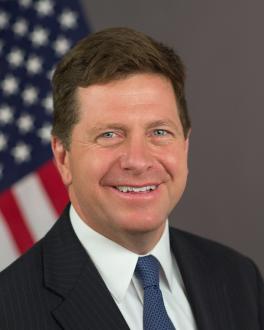
SEC Chairman Clayton Speaks to Investor Advisory Committee
Thank you, Anne [Sheehan]. Good morning everyone, and I want to extend a special welcome to our new commissioner, Allison Lee.
I am interested in today’s discussion. I understand the Committee first will be talking about the SEC approach to


Four Things No One Will Tell You About ESG Data
In a recent article, we seek to shed light on several important aspects of measuring and providing data about companies’ performance on environmental, social, and governance (ESG) issues. The article is intended to provide a useful guide for the …

Index Funds and the Cost of Engagement
Institutional ownership of companies has grown to the point that institutions today own approximately 80 percent of the market value of U.S. stocks.[1] Recent academic research explores this rising ownership concentration and debates the growing importance of “passive” or “index” …



Institutional Investors, Corporate Governance, and Stewardship Codes
As stewardship by institutional investors is an integral part of an adequate system of corporate governance, the growing diffusion of stewardship codes can be seen as a principal reaction to institutional investors’ reticence in monitoring the companies they invest in. …
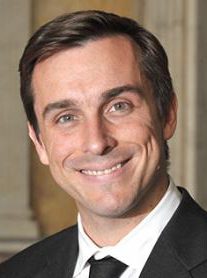
SEC Commissioner Jackson Speaks on Final Rules Governing Investment Advice
Our nation is facing a savings crisis. Many young workers are unable to save at all; half of America’s retirees have saved less than $65,000 and face the terrifying prospect of running out of money in retirement.[1] Every time
Wachtell Lipton Discusses the Corporate Form for Social Good
State legislation allowing the establishment of benefit corporations—for-profit companies with a stated public purpose—has become widespread over the past decade. This increasingly available corporate form provides a mandate, and a safe harbor, for corporate leaders to pursue societal good along …
SEC Investor Advocate Talks Investor Issues for 2019
Good afternoon. I hope you are enjoying this year’s edition of SEC Speaks, which gives the public a good overview of all the work that is going on at the Commission.[1] In the Office of the Investor Advocate, we




Disclosure Incentives When Competing Firms Have Common Ownership
Over the past three decades, there has been tremendous change in the ownership of publicly-traded firms in the U.S. Consolidation in the asset management industry and the rise in mutual fund investing have led a small number of institutional investors …
ISS Discusses U.S. Proxy Voting Trends from 2000 to 2018: Environmental and Social Issues
Appearances can be very deceiving. Case in point: The high-level summary numbers of voting results over the last 19 years seem to indicate that little has changed regarding proxy voting behavior among investors owning U.S. companies. A simple analysis of …