 Columbia Law School
 Sky Blog

Bankruptcy and Restructuring

Bankruptcy in Groups
Group bankruptcies tend to be large (e.g., Global Crossing, Maxwell, MG Rover, Parmalat) and affect a significant number of stakeholders. Business groups constitute a common way for ultimate owners to exercise control over a large number of companies while containing …
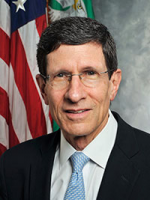
Remarks by OFR Director Richard Berner at the Third Annual Workshop on Financial Interconnectedness
Thank you to the organizers and BIS for the opportunity to address this research conference on “Global Financial Interconnectedness.” The OFR was established to identify, monitor, and assess threats to financial stability, so improving our collective understanding of the interconnectedness …

Collateral Damage: Adopting the LSOC Model and Insurance in the US Futures Markets
It is confounding that futures customers currently receive a lower level of protection than cleared swaps customers under US law. This legal phenomenon has occurred because the law in the US derivatives markets developed in a piecemeal fashion over several …

Renegotiation and the Choice of Covenants in Debt Contracts
Incomplete contracting theories build on the idea that it is either not feasible or too costly for contracting parties such as borrowers and lenders to write contracts that perfectly anticipate all future scenarios. As a result, transacting parties are left …

Could Solvency II Threaten the Financial Stability of European Insurance?
The European insurance sector has approximately 6.8 trillion euros of assets under management. It is the largest European institutional investor, a fundamental element of financial stability and provides support for the global economy. Additionally, the European insurance sector is a …
Wachtell Lipton discusses Treasury Department Seeking to Curb “Cash-Rich” and REIT Spin-Offs
The Treasury Department and the Internal Revenue Service have announced (in Notice 2015-59) that they are studying issues related to the qualification of certain corporate distributions as tax-free under Section 355 of the Internal Revenue Code in situations involving …

The Financial Industry’s Plan for Resolving Failed Megabanks Will Ensure Future Bailouts for Wall Street
The high-risk business model of large financial conglomerates (frequently called “universal banks”) was an important cause of the financial crisis. Universal banks rely on cheap funding from deposits and shadow banking liabilities to finance their speculative activities in the capital …

The Detroit Bankruptcy Blueprint
What unites Atlantic City, the Chicago Public School System, and Puerto Rico’s electric company? They are financially distressed government entities facing various legal and political barriers to using the United States bankruptcy system. Negotiations over those barriers are, in part, …
PwC discusses Resolution: Single point of entry strategy ascends
The release last week of public summaries of the resolution plans submitted by the 12 largest financial institutions operating in the US reveal more insight into the institutions’ resolution strategies than ever before, including the strategy for each of their …
Simpson Thacher discusses SDNY Decision Holding that the Termination of a Parent Guarantee Violates Section 316(b) of the Trust Indenture Act
On June 23, 2015, the District Court (the “Court”) for the Southern District of New York (the “SDNY”) held that an out-of-court restructuring that involved the elimination of a parent guarantee and a significant asset transfer …

Law and Custom as Constraints on the FOMC
The Federal Open Market Committee, which controls the supply of money in the United States, may be the country’s most important agency. The chair of the committee is often dubbed the second most powerful person in Washington, only deferring to …
Sullivan & Cromwell discusses Bank Capital Plans and Stress Tests
On July 17, the Board of Governors of the Federal Reserve System (the “FRB”) released a notice of proposed rulemaking (the “NPR” and the rules set forth therein, the “Proposed Rule”) that would modify …
Nominate Our Blog for the ABA 100
To the friends of the CLS Blue Sky Blog: The ABA journal is conducting a poll to identify the top 100 legal blogs. We would be honored by your nomination. In addition to reprinting commentary from practitioners and regulators on …

Chapter 11 Duration, Preplanned Cases, and Refiling Rates: An Empirical Analysis in the Post-BAPCPA Era
The Bankruptcy Abuse Prevention and Consumer Protection Act (“BAPCPA”),[1] enacted in 2005, has been the subject of extensive commentary over the effects that the Act might have on the chapter 11 landscape and the debtor’s reorganization chances.
In my …

Sovereign Equity – A Way Forward on Sovereign Debt?
Sovereign debt markets have been on a rough ride recently. On the heels of Argentina’s 2014 default, a turbulent debt situation in Greece has threatened the integrity of the Eurozone. An ongoing debt crisis in Ukraine has stoked economic anxiety …
Shearman & Sterling discusses Third Circuit’s Affirmation of Structured Dismissal of Chapter 11 Case, Holding That a Structured Dismissal Can Deviate From the Bankruptcy Code’s Priority Scheme in Rare Circumstances
On May 21, 2015, the United States Court of Appeals for the Third Circuit affirmed a decision of the United States Bankruptcy Court for the District of Delaware, which had approved the structured dismissal of the chapter 11 cases of …

A Market Approach to Regulating the Energy Revolution: Assurance Bonds, Insurance, and the Certain and Uncertain Risks of Hydraulic Fracturing
Despite the recent drop in oil and natural gas prices, fossil fuels continue to flow out of U.S. wells at astounding rates. In just a few years, the United States has transitioned from a position of substantial dependence on foreign …
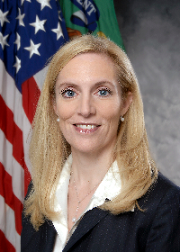
Governor Lael Brainard on Dodd-Frank at Five: Assessing Progress on Too Big to Fail
If there is one simple lesson from the crisis that we all can embrace, it is that no financial institution in America should be so big or complex that its failure would put the financial system at risk.1 Congress …

What’s the Value of a TBTF Guaranty? Evidence from the G-SII Designation for Insurance Companies
Since AIG’s bailout in September 2008, the role of large, complex insurance firms in the global financial system has received much attention. Concern about the global operations, interconnectedness, and non-traditional activities of these large firms prompted the Financial Stability Board …